
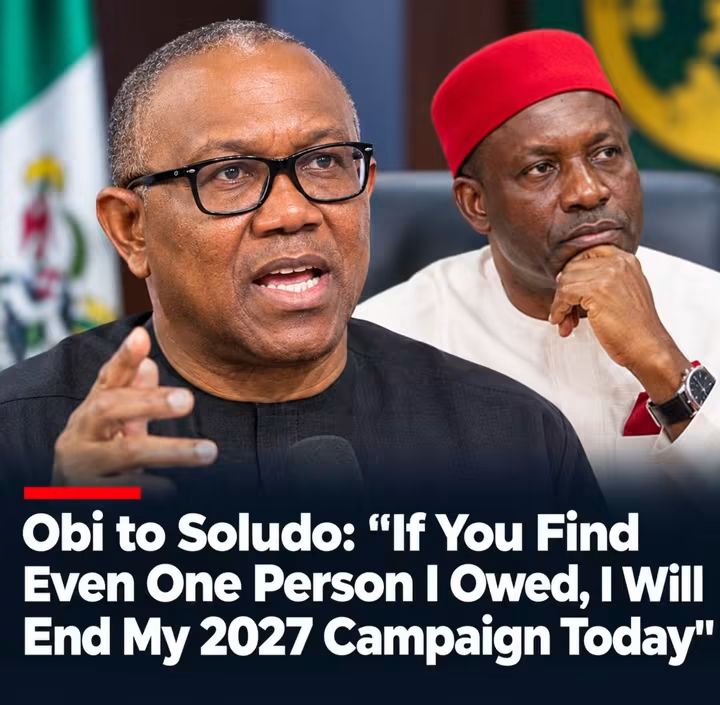
Former Anambra State Governor and 2027 presidential candidate, Peter Obi, has challenged the administration of Governor Chukwuma Soludo to provide evidence that his government left behind unpaid debts when he handed over power.
Obi made the statement in a video response to claims from the Anambra State Government concerning loans and other financial obligations allegedly inherited from previous administrations.
The controversy followed comments by the Anambra State Commissioner for Finance, Izuchukwu Okafor, who reportedly stated that deductions were still being made from the state's federal allocation to service loans associated with previous administrations, including those of Peter Obi and former Governor Willie Obiano.
Obi, however, rejected the claims and maintained that his administration left office without owing salaries, pensions, gratuities, suppliers or contractors.
The former governor challenged the Soludo administration to produce evidence of anyone his government owed when he left office.
In a strongly worded challenge, Obi said: “If you find even one person I owed, I will end my 2027 campaign today.”
The statement has reignited debate over Anambra State's financial records and the obligations inherited by successive administrations.
The disagreement also raises broader questions about transparency in public finance. If loans were contracted by previous administrations, Nigerians will be interested in knowing the original amounts, the purpose of the loans, repayment schedules, outstanding balances and the administrations responsible for them.
For Obi, the issue appears to be one of accountability and evidence. His challenge puts the focus on official financial records rather than political claims.
The controversy could also become relevant to the wider political conversation ahead of the 2027 presidential election, as Peter Obi continues to position himself as a candidate focused on accountability, prudent management of public resources and good governance.
As the debate continues, attention is now likely to shift toward documentary evidence from the relevant government agencies and financial records that can establish the nature and origin of Anambra State's outstanding obligations.
For residents of Anambra and Nigerians following the political debate, the key question remains: What debts and financial obligations were actually inherited, and which administration was responsible for them?